

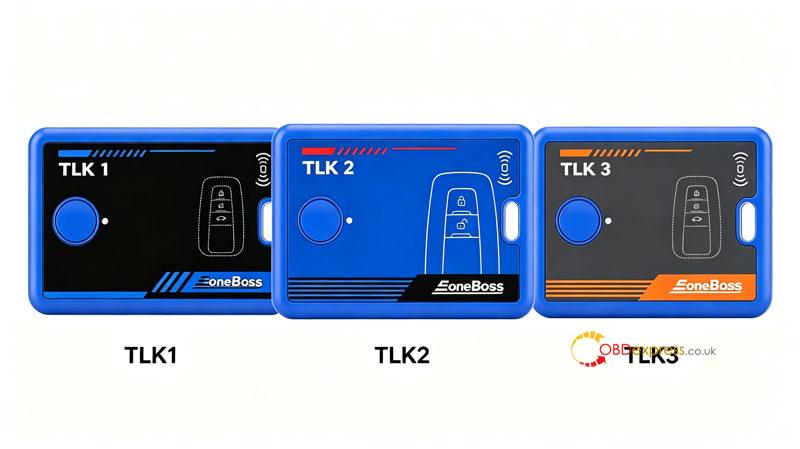
If you’re choosing between the EoneBoss TLK1, TLK2, and TLK3, the most important difference is the type of Toyota/Lexus smart key you need to unlock or program.
- TLK1 is designed for original OEM Toyota 8A smart keys.
- TLK2 is designed for original OEM Toyota 4A smart keys.
- TLK3 is designed for aftermarket and dealership smart keys with one-click unlocking and AKL signal identification.
Although these three tools are often compared together, they are built for completely different locksmith workflows and cannot replace each other.
Quick Answer: TLK1 vs TLK2 vs TLK3
| Tool | Best For | Supported Chips | Key Simulation | One-Click Unlock | Main Advantage |
| TLK1 | Original OEM Toyota/Lexus keys | 8A (AA/B8/B9/BA) | YES | NO | OEM 8A key programming |
| TLK2 | Original OEM Toyota/Lexus keys | 4A (AA/BA) | YES | NO | OEM 4A key programming |
| TLK3 | Aftermarket & dealership smart keys | 4D / 4A / 8A | NO | YES | Fast unlock + AKL identification |
The Real Difference Between TLK1/TLK2 and TLK3
The biggest difference is that TLK1 and TLK2 support key simulation, while TLK3 does not.
This is critical for Toyota smart key programming.
Original OEM Toyota keys contain protected factory data. Even after unlocking, they still require a simulated key process before they can be programmed back to the vehicle.
That is why TLK1 and TLK2 use a 3-step workflow:
- Generate simulated key data
- Match the key to the vehicle
- Perform write-back operation
Without this process, original OEM keys usually cannot be reused correctly.

TLK3 works differently.
Instead of simulation, TLK3 focuses on:
- one-click unlocking
- chip identification
- frequency detection
- AKL signal capture
This makes TLK3 much faster for aftermarket and dealership key workflows.
When You Should Choose TLK1
Choose TLK1 if you work with original Toyota/Lexus 8A smart keys.
Supported 8A chips include:
- AA
- B8
- B9
- BA
TLK1 is mainly used when reprogramming original factory smart keys that require simulation and write-back operations.
It is not intended for fast aftermarket unlocking.
When You Should Choose TLK2
TLK2 is similar to TLK1, but specifically designed for Toyota 4A smart keys.
Supported chips:
- AA
- BA
If the vehicle uses OEM 4A keys, TLK2 is the correct solution.
Like TLK1, it supports key simulation and OEM write-back programming.
When You Should Choose TLK3
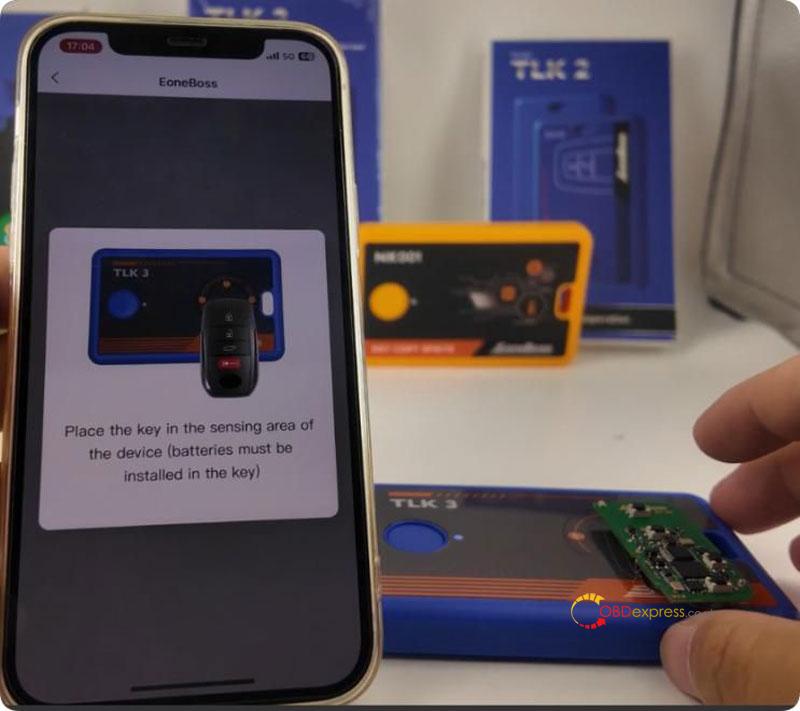
TLK3 is the better option for locksmiths who frequently work with aftermarket or dealership smart keys.
Main functions include:
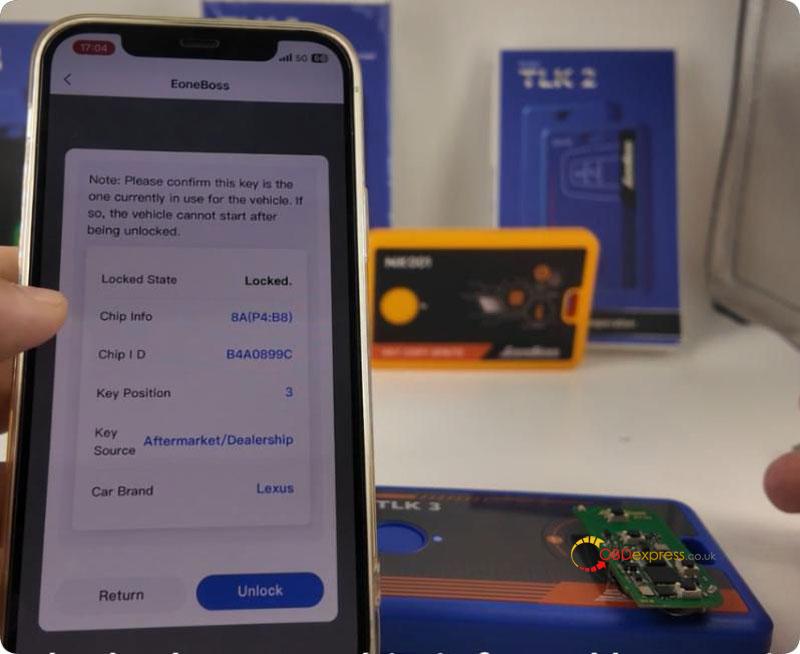
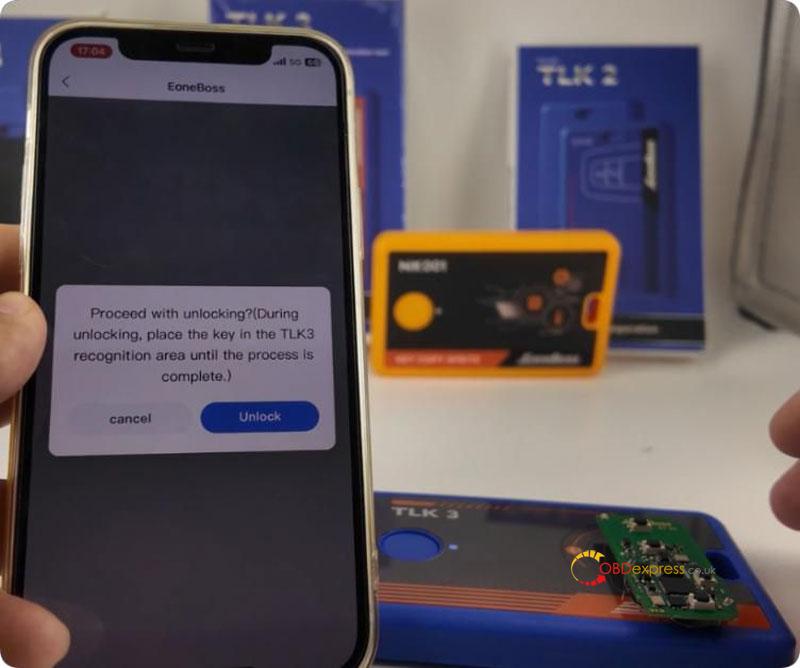
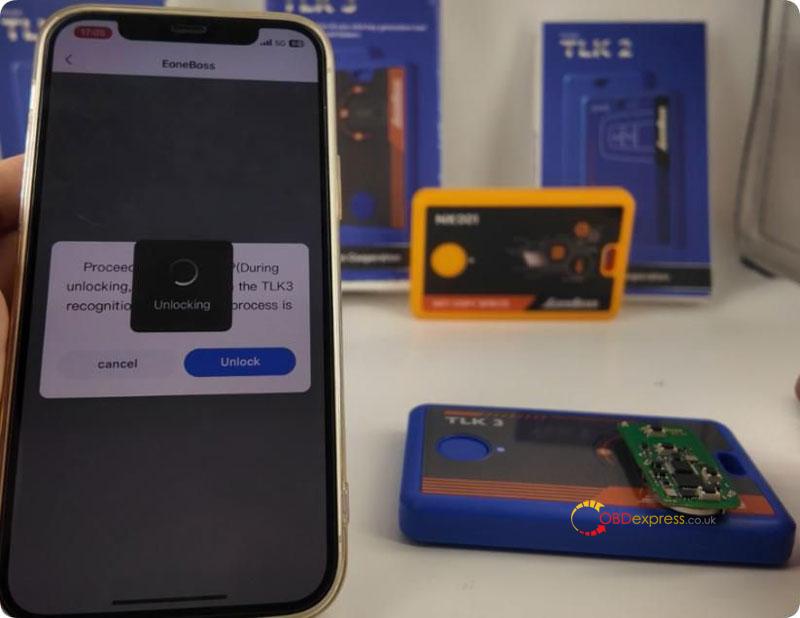
- One-click smart key unlocking
- Automatic chip identification
- Frequency detection
- All Keys Lost (AKL) signal capture
Unlike TLK1 and TLK2, TLK3 can instantly identify lock status and unlock supported keys directly from the sensing area.
This significantly reduces operating time during daily locksmith work.
However, TLK3 cannot simulate OEM keys and cannot replace TLK1 or TLK2 for original Toyota key programming.

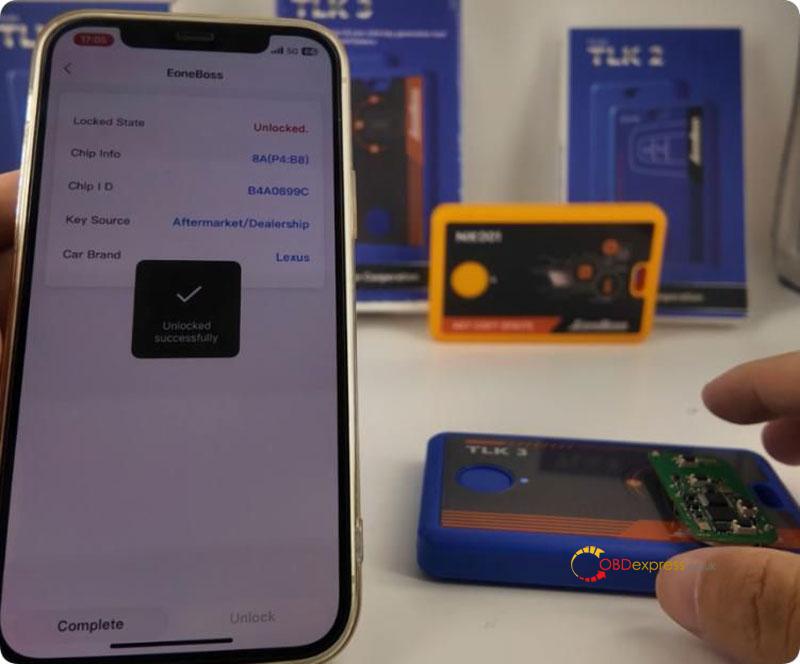
Can TLK3 Unlock Original OEM Toyota Keys?
This is one of the most common misunderstandings.
TLK3 may unlock certain OEM keys, but unlocking alone does not mean the key can be programmed back to the vehicle.
Original Toyota OEM keys still require:
- simulation
- vehicle matching
- write-back operation
That is why TLK1 and TLK2 are still required for OEM key reuse.
Which Tool Is Better for Toyota AKL Work?
For All Keys Lost situations, TLK3 has a major advantage because it can capture ignition coil signals and automatically identify:
- chip type
- frequency sequence
This helps locksmiths quickly determine the correct key generation method.
TLK1 and TLK2 are more specialized programming tools, while TLK3 is designed more as a fast identification and unlocking platform.
Final Recommendation
Choose the tool based on the key type — not the vehicle model.
- Choose TLK1 for OEM Toyota 8A keys
- Choose TLK2 for OEM Toyota 4A keys
- Choose TLK3 for aftermarket/dealership key unlocking and AKL workflows
The three tools are complementary rather than competitive.
For professional Toyota locksmith work, many workshops actually use TLK1/TLK2 together with TLK3 to cover both OEM programming and aftermarket unlocking scenarios.
